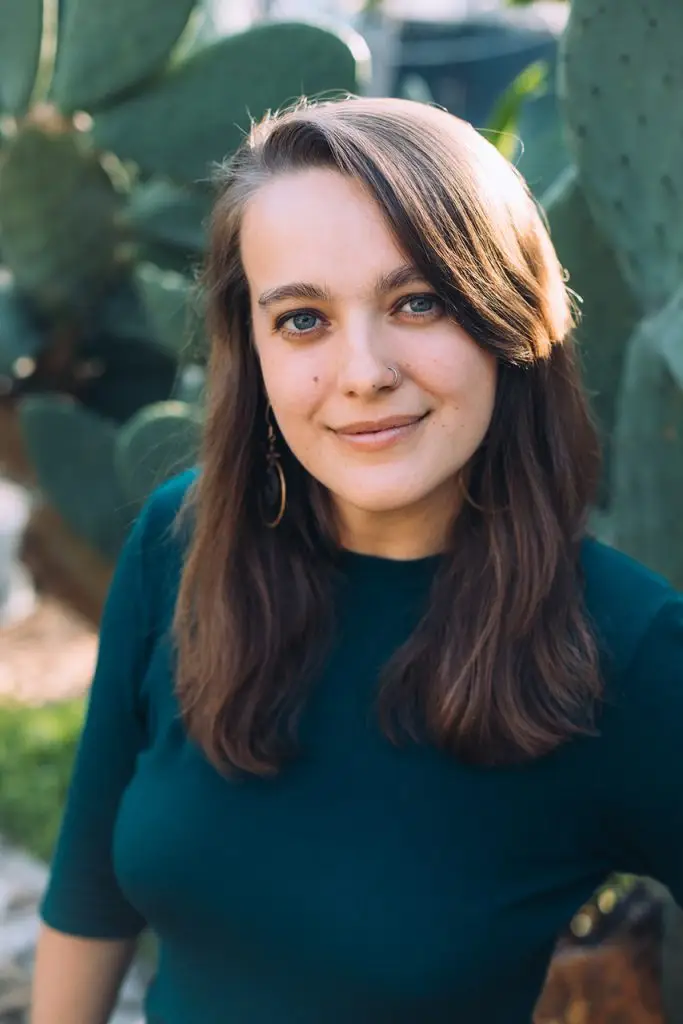
📷 credit: used by permission of Morgan Curtis
The extractive legacies of capitalism, colonialism, and white supremacy cast a shadow on the family lineages of many wealth inheritors, who are left to grapple with and repair present-day harms. These histories have implications for basic psycho-social human needs, like belonging and identity.
That is why we are so grateful to our Learning Fellow ari vargas for their year spent researching the intersection of somatics and philanthropy. Through conversations with allies working to invite embodied awareness to durable social change, ari explored methods that support values-aligned giving and recovery journeys.
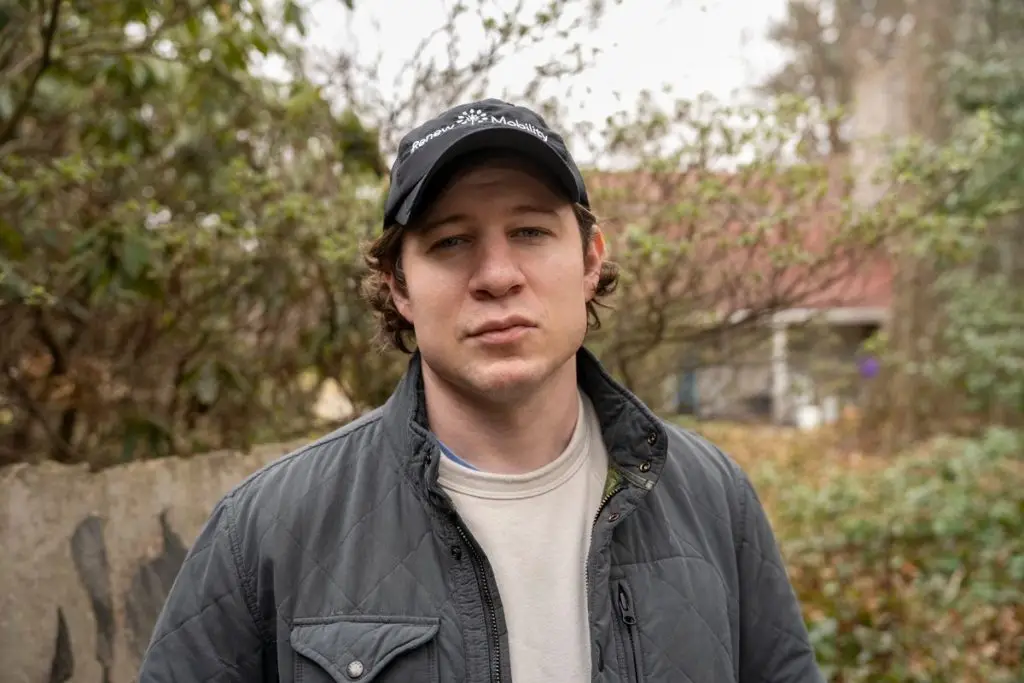
One of the interviews that ari conducted was with Morgan Curtis, an ancestors and money coach who recently joined Solidaire Network staff as a donor organizer. ari has offered a condensed version of their conversation below.
ari vargas:
I know that there might be folks who aren’t familiar with your work. And so I wanted to start really simply with asking about how you describe what your work is and the story of what brought you into your vocation.
Morgan Curtis:
Thanks for taking that time to be with my story. I feel like the work that’s mine to do is around supporting my fellow people with wealth, class, and race privilege around reckoning with our histories and seeing what is ours to do now toward healing, repair, redistribution, and rebalancing. That work very much arises from my own story and my own path.
I was born in London, England, and my parents call themselves upper-middle class. They’re both from a commuting town in Connecticut. Both of my grandfathers were investment bankers. I was raised with a lot of material comfort and privilege. I was taught to be grateful for our family being lucky, but I was never taught any sort of analysis around why some families are lucky. So that became my own journey to try and figure that out.
A big moment of political awakening for me was the fossil fuel divestment movement in 2013. While helping launch a campaign asking my university to divest the endowment from the fossil fuel industry, I learned that I myself was invested in the fossil fuel industry through money that I had inherited. And so I began this twin political journey of organizing in the world and organizing in my family. I saw the things that I wanted to change in dominant institutions were also things I needed to change about myself and my family and our own choices.
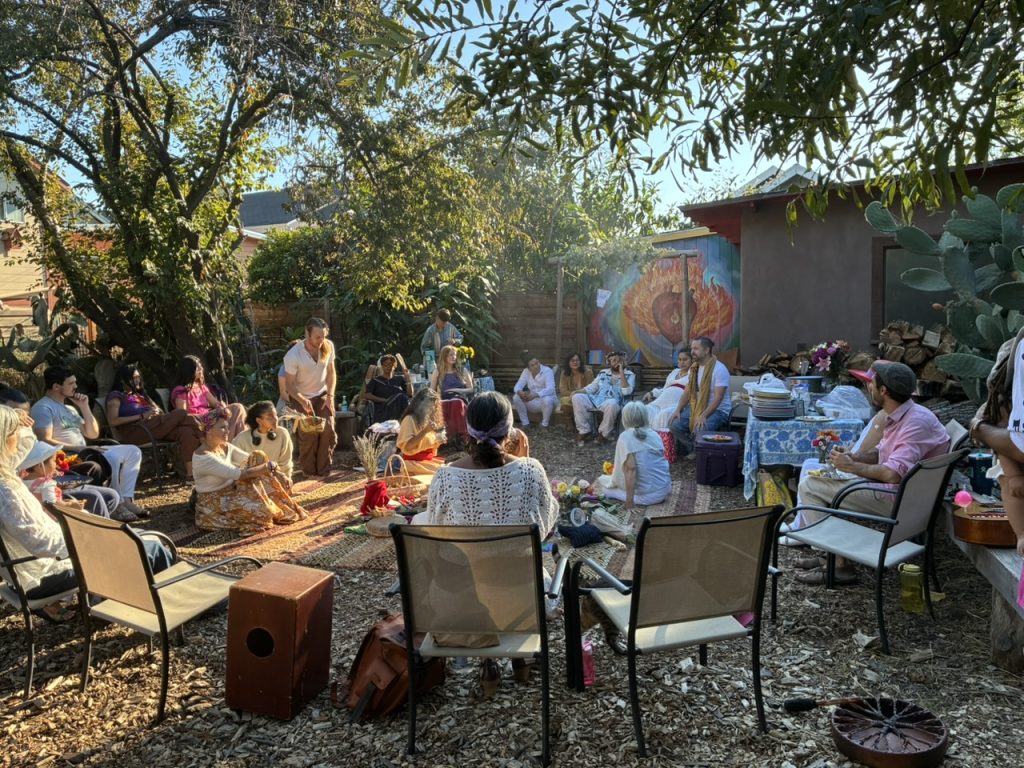
That work led me to climate justice organizing, Indigenous solidarity work, and the cross-class multiracial intentional community at Canticle Farm. And through that organizing work, I finally heard the message from both my peers and elders, mostly the people of color, “Morgan, can you please go do the work with your own people?” I was initially very resistant to that idea, but realized that if there was a way for me, my family, and our story to turn toward something other than continuing the legacies of harm and extraction that I inherited, I was going to have to put some attention there. And the more I turned toward my family, my own history, the money I inherited, the more I kept finding other people who were asking those same questions and trying to implement the same values in relationship to wealth and class privilege.
Over time, I became someone that was more visible. People started confiding in me and pulling me aside to be the first person they ever told they had inherited wealth. And the more often that happened to me, the more I was like, I think this might be my role in the very broad tapestry of all the work we need for liberation.
ari vargas:
Why were you at first resistant to the idea of working with your own folks?
Morgan Curtis:
When I was first hearing terms like colonialism, white supremacy, and capitalism, it was really easy for me to see that those things were pointing at my family being on the wrong side of the story. I was like, “Capitalism — that’s my grandfather’s working on Wall Street. Colonialism — that’s my creepy military ancestors whose oil paintings hung in my house growing up.”
And so there was a lot of guilt, shame, self-flagellation, and self punishment that came up for me, thinking “We must be fundamentally bad, and the best thing I can do is get as far away from that world as I can.” It took some effort to step off the path that I had been raised to follow. And it felt like when people were saying, “Please go do the work with your own people,” that they were asking me to get back on that path toward participating in dominant society. And I was like, “I don’t want to go back.”
But what I had to realize was that I was not the first person born into privilege that had come to question these systems. And in fact, what is needed is making more and more space for people who share parts of my background to do the same. It’s actually about growing what can be a beloved community of people who are doing that deep questioning work.
ari vargas:
Thank you. I know that you’re someone who has done so much work in order to not let shame stop your work. It reminds me of something you said in your interview with Ayana in For the Wild — that we can only heal when we’ve put right that which we’ve done wrong. I’m curious about what you would say to folks who are inheritors of wealth who struggle to acknowledge that responsibility or who view their ancestors’ extractive practices as separate from their own.
Morgan Curtis:
I’ve come to more peace that no one person can change any other one person. Instead what we’re doing is a collective project of creating movements, cultures, and ways of thinking that can slowly open someone up to seeing something differently. I want to contribute to a bigger narrative and a bigger invitation that may or may not beckon to them.
Some people come to the work of wealth redistribution with total clarity that repair for ancestral harm is what’s motivating them. For other people, that’s more of a new or strange idea, but there’s still something in them that’s saying something’s not right. Whether it’s “I have too much, and other people have too little,” or “Even I feel having all this money has not been good for me. On some level it’s stifled my life, my creativity, my connection to others,” or “I feel like these investments that I have right now are out of alignment with my values.” There’s a lot of different starting places that bring people to this work. And I feel like my role is to meet them there in whatever motivation is bringing them.
ari vargas:
I love that. I feel like what I’m hearing is the importance of meeting someone exactly where they are and being able to actually attune to that, which I find really resonant with end-of-life work too. I’ve been really curious if you could speak to maybe a guiding framework or philosophy that you hold in your own advising practice. What does that actually look like for you to really sit with someone in the shadows of this work?
Morgan Curtis:
One that I use a lot in this work is “what’s ready to die and what’s trying to be born?” On the intergenerational scale, what stops with you? What’s been going on for some generations in your family that you’re unwilling to continue?
Often people come to me because they’ve felt like no matter what they do, it’ll still cause harm. A lot of the time it’s like they’ve been pushed into a corner by guilt and shame, and it feels like my job is to help them breathe and expand again into, “I could be part of the healing. Some small amount of repair could still be possible. Maybe that’s actually connected to why I am here. Maybe I was actually put into this story for a reason. Maybe part of my being here in this family; however hard it might’ve been, was so that I could take part in this bigger story of changing power and how it’s distributed in this country.”
Sometimes I summarize my job as to love people when they’ve told themselves that they’re unlovable. I believe that they have something to contribute and that my role is to stay with them until it becomes clear what that is. So lots of visioning, lots of, “Even though you don’t know the way, what might the next step be?” And, “If you can glimpse anything on the horizon of your life, what is hovering out there that might be able to call you out of this corner you felt stuck in?”
ari vargas:
That’s really beautiful. I’m wondering if there are specific practices that you’ve noticed to support folks remembering that they are lovable.
Morgan Curtis:
I think an important thing I always say to folks about coaching is this is a healing journey, and it’s an action journey. We’re not here just to have insight and reflection. We’re also here to make things happen in the world, whether it’s the money that could move or the conversation that needs to happen or the relationship that needs to be tended.
I wrote this poem once. The closing line was, “what we’re most ashamed of / is not what they did / but what we are yet to do.” I just think the most powerful antidote to shame is action in a different direction.
That is the core practice that I’m supporting people to get into, and it’s not action for action’s sake. It’s truly what’s the most authentic expression of this in the world right now for you? And if the step is coming from a sense of obligation, pressure, or impressing someone else… that’s not going to help us move forward. Really, what are you called toward?
ari vargas:
I love what you’re saying about taking action. It reminds me of how in somatics there’s a common knowledge that in order to actually create a new neural pathway, you need to do something 3,000 times. And I think it’s 300 times to even just be aware that there’s another option, another choice, and then 3,000 to have that be automatic. I feel like what I’m hearing is helping folks remember the choices that are beyond rooted shame.
I am really curious about what the work has looked like for you to redistribute your inheritance. I know that you’ve committed to redistributing 100% of it. In my research, there’s a lot of overwhelm from folks even knowing how to do it. I’m curious about the obstacles you faced.
Morgan Curtis:
I inherited about $600,000, and I’ve pretty much finished giving that away (I made a few loans that are slowly being paid back). I zeroed out the bank account where I keep my inherited money right before my daughter was born. Someone said to me, “Prepare for birth as if you’re preparing for death. Make sure you’ve wrapped up your loose ends.” There was something profound about closing one chapter as another began.
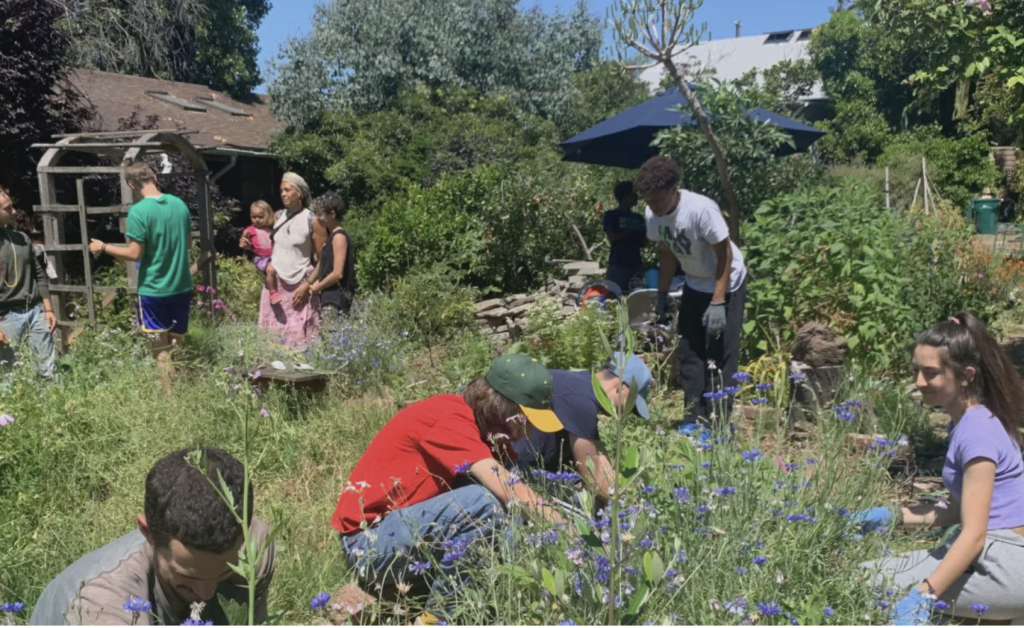
I redistributed the money over about five years. Loosely, I organized it into thirds: about a third to Black liberation work, Black-led organizing, and land projects; about a third to Indigenous land return and organizing; and about a third to local community projects, mutual aid, and individuals.
I felt very privileged in that, through my organizing and movement work, I already had a pretty clear sense of places to begin, including some larger multi-year commitments. I was also part of Resource Generation, and both our Bay Area chapter and the national organization have movement partners members are invited to support. Part of my practice of redistributing power was asking: how is the political home I’ve joined collectively choosing to move resources? I also looked for ways to redistribute decision-making power by giving through regranting organizations led by people with deep lived experience and belonging in the communities they’re supporting.
At the same time, it’s also been important to me to directly support individual projects and organizations I’ve been in relationship with or personally invited into. I didn’t want redistributing decision-making power to become a way of avoiding accountable cross-class relationships altogether by staying anonymous or removed. I think there’s transformative potential in showing up as both a human being and a donor in direct relationship with social justice work. Resources are one of the things we carry into relationship, whether we acknowledge them or not. Wealthy people can absolutely make mistakes and cause harm, but we can also become catalysts for healing, repair, and connection. I don’t want us to miss out on the possibility of transformation because we’re so afraid of getting it wrong.
And in terms of how we decide what to support – I think there’s a whole spectrum. On one end is the perfectly researched strategy: fully thought through, historically grounded, backed by endless analysis. On the other end is pure intuition and emergence: this person asked me, this opportunity appeared, my body gave a clear yes.
What I’ve come to believe is that neither end of that spectrum is inherently more correct. My invitation is for us to notice where we already feel most comfortable and experiment with stretching in the other direction. If I tend toward intuition and emergence, maybe I can practice more strategy and long-term thinking. If I’m rigidly trying to get everything exactly right, maybe I can practice more responsiveness and trust.
Because ultimately, there is so much that genuinely needs resourcing: grassroots organizing, community healing, land return, bail funds, mutual aid, rent support, cultural work, leadership development – the list is endless. It’s all needed. And in that sense, I think one of the biggest shifts for people with wealth is letting go of the idea that there is one perfect, morally pure way to redistribute resources successfully. The work is to stay responsive, accountable, and in relationship, rather than frozen trying to find the one right answer.
ari vargas:
Wow. I feel like you just pointed to something that I have found so frustrating in philanthropy, which is how risk-averse folks and organizations with so much wealth are. I love that that’s a principle you’re working with. Do you find that folks who come to you specifically are already able to let go of perfectionism?
Morgan Curtis:
Most often I’m working specifically with folks with inherited wealth, so that usually overlaps with having been raised in a class-privileged context. And I think a lot of that elite training is around perfectionism and one right way to be successful. I think even for the people I work with who’ve been organized, radicalized, or had some sort of political or spiritual awakening, it takes a lot to let go of those layers of conditioning. People often have other people looming over them, whether it’s financial advisers, trustees, parents, or spouses who maybe haven’t been on that same journey and are like, “Sure you can do some philanthropy, but you better be smart about it.” So it takes conscious work to support one another to find the courage and capacity to move boldly and in alignment with what movements need.
ari vargas:
I’m wondering what sustains you in this work. I think it can be really incremental and slow work. What and who are your North Stars?
Morgan Curtis:
Two things came to mind. One is belonging to an intentional community – my daily life is one particular experiment of 50 people coming together across generations, race, class; and the big ups and downs of our life together are definitely my spiritual and political foundation for this work. However much time I spend on Zoom, strategizing with wealthy people, or holding people’s feelings in ways that can feel like they’re shifting only ever so slowly, I get to come home to practicing being human together, healing together, and doing it actually here and now, not just in some hypothetical world. So that both sustains me and sometimes also exhausts me!
The other one that comes to mind is the really beautiful wins that happen along the way. It’s meeting fundraising goals for organizations or people that felt impossible, when land is returned, when campaigns are won. I feel like my exposure to so many people working on redistribution in so many ways means that I actually hear a reasonable amount of good news somewhat often! That is a big joy of this work for me.
ari vargas:
One of my favorite things you said was about viewing reparations as spiritual work. That really stuck with me because there’s obviously this professionalization of philanthropy and wealth redistribution. How do we bring the spirit back into this work? Money is an energetic source, and it feels like there are these little pockets of folks that are really bringing spirit and ritual to this work. I’m wondering if you have ideas about how we can bring spirituality into philanthropy with integrity, and how we might be able to do that even with donor organizing?
Morgan Curtis:
Yeah, so much to say. I’ve been co-facilitating for a few years a program called the Ancestors and Money Cohort. This offering arose out of being in organizing spaces around wealth redistribution and feeling like there was never enough space to go to the depth that this work requires. I think even for people who wouldn’t think of themselves as spiritual, this work asks questions like, “Why am I here? Why was I born into this family? What happens after I die? What is my life really for? And how do I know when I’m taking the next right step?”
In that cohort, we welcome people who have a direct, literal, spiritual relationship with their ancestors. And we welcome people for whom that’s kind of a wild idea, but maybe you’re open to it as a metaphor.
The practices can be simple. Write a letter to your great, great grandfather who generated the wealth, and then just let your hand write a letter from him back to you. Maybe you take that letter to his grave and just sit and notice what happens while you’re there. Or maybe you write your giving plan on a piece of paper and take it on a long walk in the woods. And when you get back, look at it again with fresh eyes.
How do we let ourselves welcome in other ways of knowing and simple practices that can support us to move beyond where we get stuck? That question took me to divinity school where I spent two years being with the spiritual dimension of this work.
One paper I wrote while I was there was called “Reconnection to the Natural World as a Strategy for Actualizing The Reparative Redistribution of White Wealth.” If we’re not choosing to continue the faith traditions of our ancestors that have caused harm in the ways we’re trying to undo, what are we looking toward instead? What is it, as a settler on stolen land, to be in relationship with the natural world?
ari vargas:
Thank you so much, Morgan.
Morgan Curtis:
Thank you, ari.
Having finished their fellowship, ari is currently preparing to begin graduate school at Smith School of Social Work and begin their Clinical Internship with Kaiser Hospice in San Francisco, where they will be working in bereavement care. For more, reach out to ari at ‘avargas’ at berkeley.edu. Thank you and we wish you all the best, ari!